
The Three Pillars of Enterprise Digital Transformation: From Vision to Execution
Why Enterprise Digital Transformation Is No Longer Optional
Enterprise digital transformation is no longer optional. Organizations across industries are under pressure to modernize operations, meet rising customer expectations, and respond faster to market change. Yet despite significant investment in cloud platforms, automation tools, and analytics solutions, many transformation programs fail to produce meaningful business results.
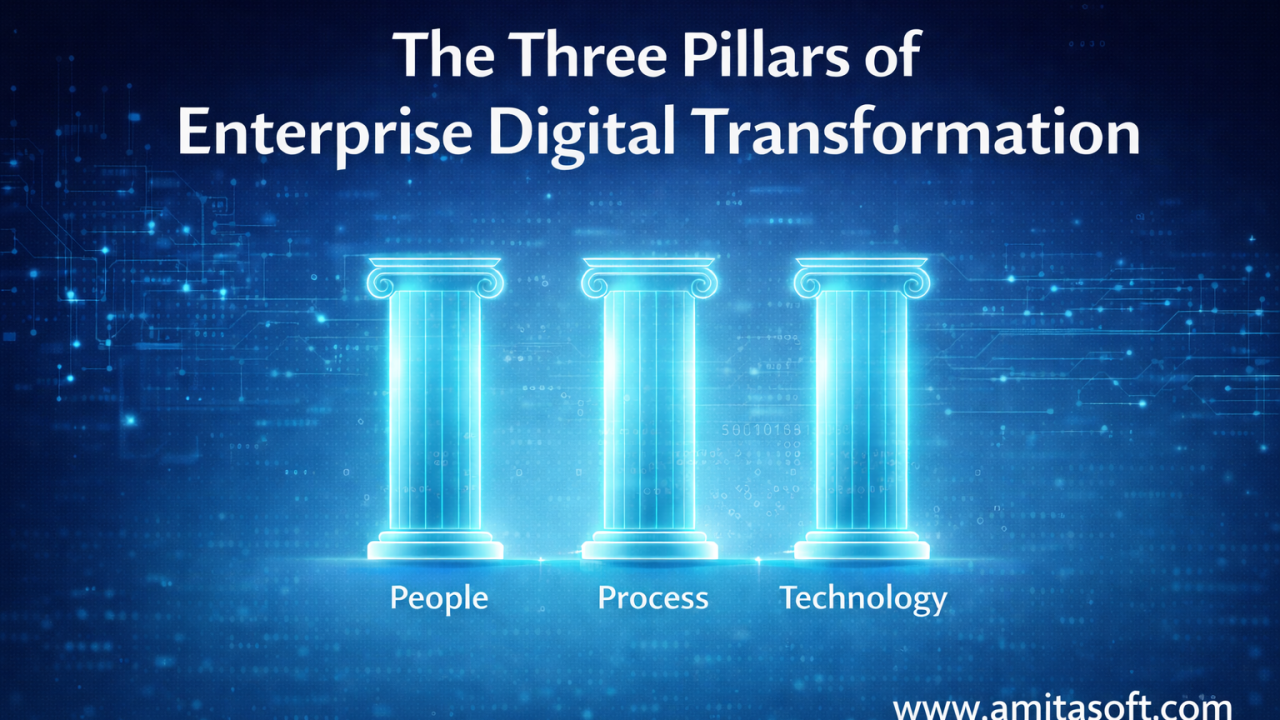
The reason is simple: digital transformation is often treated as a technology upgrade rather than a business transformation. Successful enterprises understand that sustainable change rests on three interconnected pillars:
People. Processes. Technology.
When these pillars move in harmony, digital initiatives translate into operational efficiency, employee empowerment, and measurable growth.
Pillar One: People — The True Drivers of Transformation
Every transformation begins with people.
Technology can enable change, but only employees and leaders can make it real.
The Core Challenge
Many enterprises struggle with:
- Resistance to change driven by uncertainty
- Limited digital skills across teams
- Organizational silos that block collaboration
- Leadership viewing transformation as an IT initiative instead of a cultural shift
Without employee buy-in, even the most advanced platforms remain underutilized.
Why People Come First
Digital maturity depends on building a culture that embraces learning, experimentation, and shared ownership. Employees must feel involved in shaping new workflows, not simply handed new systems. Industry analysis on Finance Technology adoption shows that organizations that align technology strategy with workforce readiness significantly outperform peers in transformation success rates.
Organizations that prioritize people focus on:
- Change management and communication
- Continuous upskilling
- Cross-functional collaboration
- Leadership alignment around transformation goals
When teams understand why change is happening and how it benefits their work, adoption accelerates and innovation becomes part of daily operations.
Pillar Two: Processes — Modernizing How Work Gets Done
A common mistake in enterprise digital transformation strategy. If workflows are broken, technology alone will only make problems move faster.
The Reality of Legacy Operations
Traditional enterprise processes are often:
- Manual and approval-heavy
- Dependent on emails and spreadsheets
- Fragmented across departments
- Difficult to measure in real time
These inefficiencies create delays, increase operational costs, and degrade customer experience.
Process-First Transformation
High-performing organizations redesign workflows before introducing new tools. They aim for processes that are:
- End-to-end process automation
- Integrated across systems
- Data-driven decision-making
- Transparent and measurable
- Examples include:
- Automated approvals replacing manual sign-offs
- Unified data platforms eliminating duplicate entry
- Real-time dashboards replacing static reports
By optimizing processes first, enterprises ensure technology investments generate tangible outcomes faster cycles, fewer errors, and greater operational clarity.
Pillar Three: Technology A Strategic Enabler, Not the Starting Point
Technology is often seen as the centerpiece of transformation cloud computing, AI, analytics, and automation dominate boardroom discussions.
But technology should support strategy, not define it.
The Common Technology Trap
Organizations frequently adopt:
- Disconnected point solutions
- Overlapping platforms
- Tools that don’t integrate with core systems
- Systems without clear business ownership
This leads to complexity instead of capability.
Outcome-Driven Technology
Effective digital transformation uses technology to solve specific business problems, such as:
- Improving customer experience
- Increasing operational efficiency
- Enhancing decision-making through data
- Strengthening security and governance
Cloud platforms provide scalability. Analytics unlock insights. Automation removes repetitive work. But these tools deliver value only when aligned with people and processes.
Modern enterprises design technology ecosystems that are:
- Scalable and secure
- Integrated across functions
- Flexible enough to evolve with business needs
For organizations in lending and financial services seeking AI-driven workflow automation and structured loan operations, platforms like CliQloan demonstrate how intelligent systems can streamline underwriting, improve compliance visibility, and enhance operational performance within digital transformation initiatives.
Technology becomes powerful when it enables smarter workflows and better decisions not when it exists in isolation.
Why Alignment Across All Three Pillars Matters
True transformation happens at the intersection of People, Processes, and Technology.
When all three pillars work together:
- Employees become engaged contributors
- Operations become agile and efficient
- Technology investments deliver measurable ROI
Customers receive faster, more personalized service
Enterprise digital transformation shifts from isolated projects to a continuous organizational capability.
Solving Real Enterprise Challenges
Across industries, enterprises face similar pressures:
- Legacy systems slowing innovation
- Limited visibility into operational performance
- Increasing customer expectations
- Rising regulatory and security requirements
Mortgage compliance requires transparency, structured documentation, and clear audit trails throughout the lending lifecycle.
This reinforces the need for enterprise digital transformation initiatives that prioritize workflow governance, real-time compliance visibility, and integrated document management systems.
Addressing these challenges requires an integrated approach combining workflow optimization, data intelligence, and scalable digital platforms. Organizations that succeed focus on practical use cases first: automating high-friction processes, connecting siloed data, and empowering teams with real-time insights. Transformation becomes less about experimentation and more about execution.
From Strategy to Sustainable Impact
Digital transformation strategy often fails when strategy remains confined to presentations and roadmaps.
Success depends on disciplined execution:
- Defining clear business outcomes
- Prioritizing high-impact initiatives
- Delivering incremental wins alongside long-term change
- Measuring progress continuously
Enterprises that treat transformation as an ongoing journey rather than a one-time program build enterprise resilience and adaptability into their operating model.
Building Transformation That Lasts
Enterprise digital transformation is not about chasing the latest technology trends. It’s about reimagining how organizations operate, empowering people, streamlining processes, and deploying technology with purpose.
When these three pillars are aligned, businesses gain more than efficiency. They gain enterprise agility, insight, and a foundation for continuous innovation. That is what separates organizations that merely adopt digital tools from those that truly transform.