
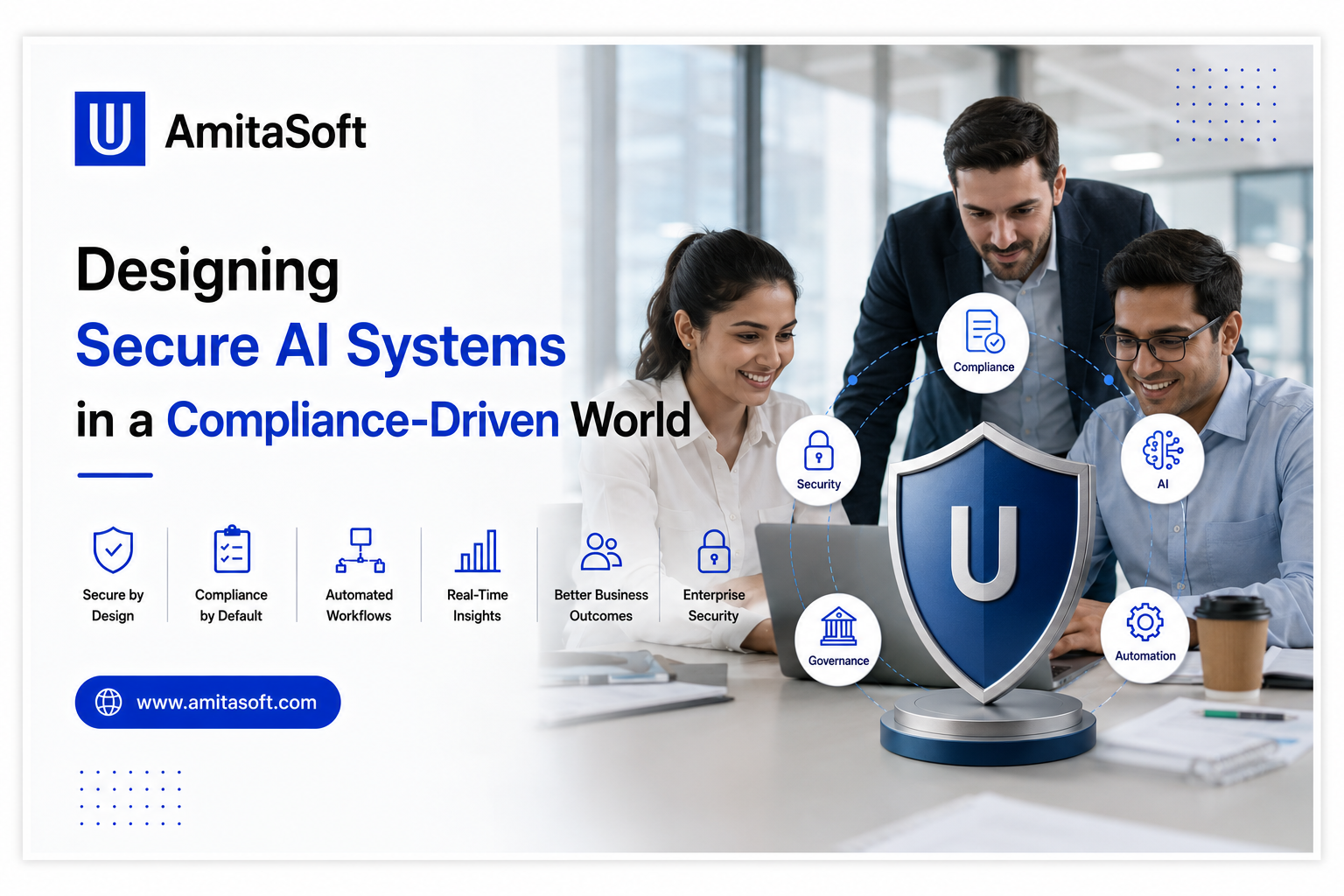
Artificial intelligence is rapidly transforming industries across the United States. From financial services and mortgage lending to healthcare, legal operations, and enterprise technology, AI systems are reshaping how organizations make decisions, process data, and deliver services. However, in highly regulated environments, innovation alone is not enough. AI must be secure, transparent, and compliant with regulatory standards.
Advances in Finance AI are enabling organizations to automate risk analysis, detect fraud patterns, and strengthen compliance validation while maintaining transparency and auditability across complex financial workflows. By combining machine learning with strong governance frameworks, enterprises can deploy AI systems that deliver both operational efficiency and regulatory accountability.
Organizations operating in sectors such as banking, fintech, and lending must ensure their AI systems align with frameworks like data privacy regulations, financial oversight requirements, and cybersecurity guidelines.
Why Compliance-Driven Industries Require Secure AI Design
Industries handling financial data, customer records, and regulated transactions operate under strict compliance requirements.
These may include:
- Data privacy protections
- Audit and reporting obligations
- Risk management frameworks
- Financial regulatory oversight
- Cybersecurity compliance standards
Organizations deploying AI without governance controls expose themselves to serious risks, including regulatory penalties, operational disruptions, and reputational damage. Without proper safeguards, AI systems can become opaque “black boxes,” making it difficult to explain decisions or demonstrate regulatory compliance.
In compliance-driven sectors, explainability and traceability are not optional—they are mandatory.
The Governance Gap in Enterprise AI Adoption
Across the U.S., many organizations are rapidly adopting AI-driven automation to improve efficiency and competitiveness. However, governance frameworks often struggle to keep pace with technological innovation.
Common challenges include:
- AI models trained on unstructured or poorly governed datasets
- Limited transparency in automated decision processes
- Lack of audit trails for AI-driven outcomes
- Fragmented integration across enterprise systems
- Inconsistent compliance monitoring
These issues create significant risk for organizations operating in regulated industries such as lending, financial services, and insurance. To address this challenge, enterprises must design AI systems where security and compliance are built into the architecture from the start.
Core Principles of Secure AI System Design
Building secure AI systems requires a structured approach that integrates technology, governance, and operational workflows.
1. Data Governance and Controlled Access
Secure AI begins with responsible data management. Organizations must establish strong governance policies that define how data is collected, processed, and accessed. Key controls include:
- Role-based data access
- Secure data pipelines
- Encryption of sensitive information
- Data lineage tracking
- Centralized document governance
These measures ensure that AI systems operate using trusted, compliant datasets.
2. Explainability and Decision Transparency
In the United States, regulators expect organizations to justify automated decisions that impact consumers. This is particularly important in financial services and lending, where AI may influence credit decisions or risk assessments. Secure AI systems must support:
- Transparent decision logic
- Documented model behavior
- Historical audit records
- Traceable data inputs and outputs
This level of visibility ensures that organizations can respond effectively to regulatory reviews or compliance audits. According to cybersecurity guidance from the National Institute of Standards and Technology (NIST), organizations should design digital systems that maintain clear accountability for automated decisions and data usage.
3. Compliance Embedded Within Workflows
Many organizations attempt to address compliance as a separate process. In reality, compliance should be embedded directly within operational workflows. Secure AI systems integrate:
- Automated policy checks
- Compliance validation steps
- Controlled approval hierarchies
- Version-controlled documentation
This ensures that regulatory requirements are continuously enforced throughout the AI lifecycle.
4. Zero-Trust Security Architecture
Modern enterprise systems increasingly adopt zero-trust security frameworks, where access is continuously verified rather than assumed. For AI systems, this includes:
- Multi-factor authentication (MFA)
- Role-based access permissions
- Secure API connections
- Continuous system monitoring
- Behavioral anomaly detection
Zero-trust architectures reduce exposure to insider threats, credential theft, and unauthorized system access.
AI Security as a Strategic Business Advantage
Secure AI systems do more than protect organizations from cyber threats—they strengthen operational credibility. Organizations that prioritize secure AI design benefit from:
- Greater regulatory confidence
- Improved risk management
- Stronger customer trust
- Enhanced operational transparency
In industries where compliance defines market access, these advantages are significant.
Enterprise AI in Regulated Financial Workflows
One of the most impactful applications of secure AI systems is in financial services and lending operations. AI technologies can automate complex processes such as:
- Loan underwriting
- Fraud detection
- Compliance monitoring
- Risk assessment
- Financial document processing
However, these systems must operate within strict compliance frameworks. Secure enterprise platforms demonstrate how AI can streamline operations while maintaining governance and transparency.
This philosophy is reflected in platforms like Amitasoft, which focuses on integrating AI-driven automation with enterprise workflow governance and compliance visibility. By combining intelligent automation with structured oversight, organizations can modernize operations without sacrificing regulatory accountability. Rather than layering AI onto fragmented systems, modern enterprise platforms integrate:
- Data intelligence
- Workflow orchestration
- Compliance monitoring
- Scalable enterprise infrastructure
This approach ensures that AI enhances operational performance while remaining aligned with regulatory expectations.
Preparing for the Future of AI Governance
The regulatory landscape surrounding AI is evolving rapidly in the United States. Future compliance requirements may include:
- Mandatory AI risk assessments
- Algorithm transparency requirements
- Bias detection monitoring
- Continuous regulatory reporting
Organizations must design AI systems that are adaptable to these evolving expectations. Future-ready AI architectures incorporate:
- Continuous model monitoring
- Automated anomaly detection
- Dynamic policy updates
- Integrated risk management systems
These capabilities enable organizations to maintain compliance even as regulatory frameworks change.
The Shift Toward Responsible AI Innovation
The conversation around AI is shifting from speed to responsibility. Enterprises are increasingly asking: How can we automate responsibly?
Responsible AI design requires balancing innovation with governance. Organizations that embed security, transparency, and compliance directly into their AI systems will lead the next generation of enterprise innovation. Secure AI enables organizations to move faster while maintaining accountability.
Intelligence That Can Be Trusted
In a compliance-driven world, artificial intelligence must deliver more than automation. It must deliver trust, transparency, and accountability. Designing secure AI systems requires:
- Strong data governance
- Transparent decision frameworks
- Embedded compliance controls
- Zero-trust security architectures
- Continuous monitoring and oversight
Organizations that integrate these principles into their digital transformation strategies will build AI systems that not only perform efficiently but also operate responsibly. In regulated industries, trust is the ultimate currency. And secure AI is the foundation that makes that trust possible.
AmitaSoft is focused on building products that solve critical workflow challenges across regulated and document-heavy environments.
Our ecosystem includes:
- * SafeVault — A secure platform for document governance, control, and compliance. www.safevaultusa.com
- * CliQloan — An AI-powered platform designed to reduce errors and delays in loan processing www.cliqloan.com
We believe better systems lead to better decisions — and ultimately, better outcomes.