
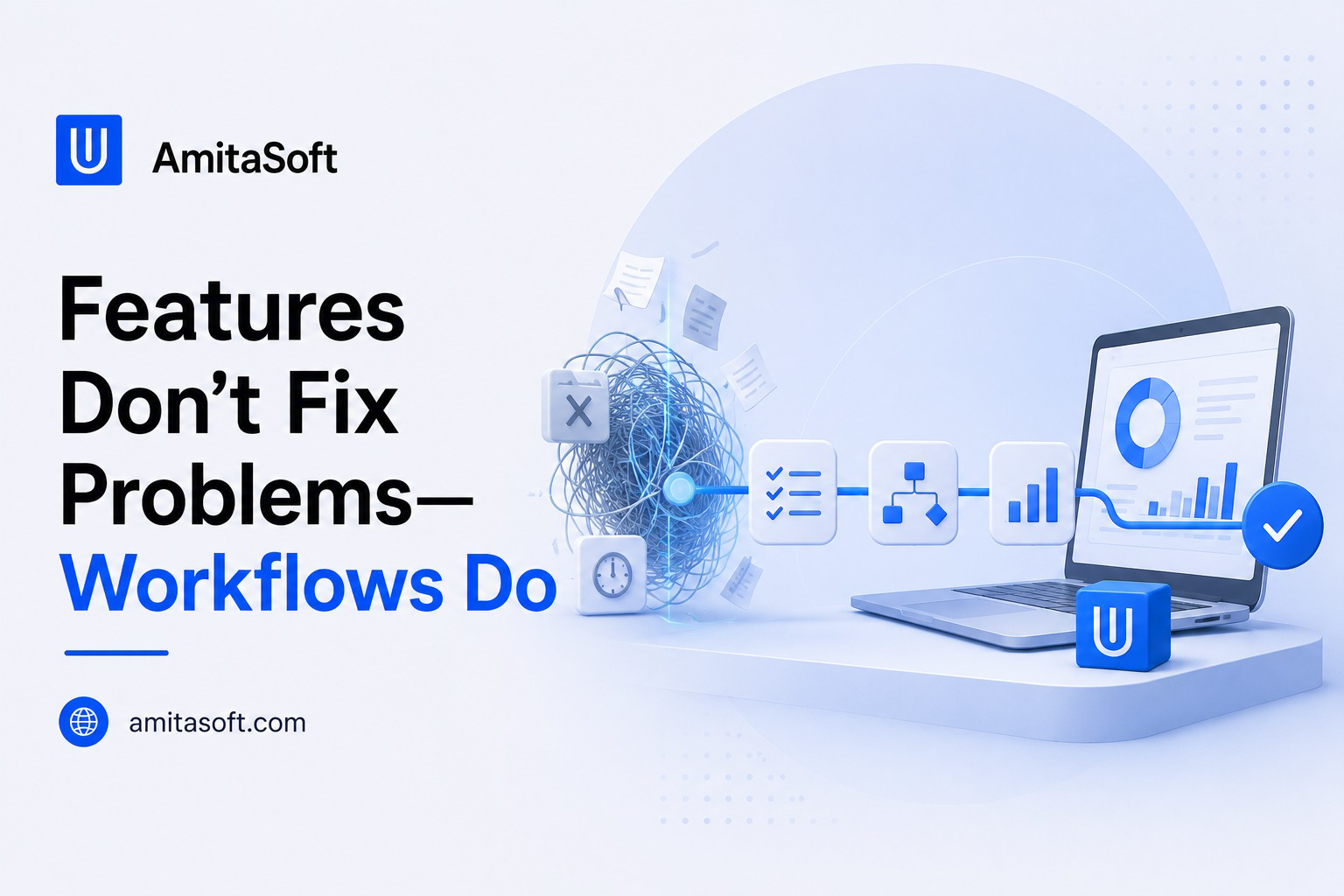
A lot of tools promise to reduce effort and make life easier, but they only end up making it more complicated. The real problem isn’t missing features, but it's broken workflows that keep slowing you down.
In the world of FinTech, finance technology, and modern digital lending technology, software is everywhere. From loan origination systems to advanced finance AI and mortgage AI tools, there’s no shortage of platforms promising to make your life easier. Many finance cloud solutions offered by leading cloud technology company providers highlight powerful features, while digital platform development and technology services continue to evolve rapidly. Yet, despite all these innovations, many mortgage professionals still feel overwhelmed, inefficient, and stuck in repetitive cycles of manual work.
Why?
Because features don’t fix problems—workflows do.
The Feature Obsession in FinTech
Everyone keeps adding more features, but no one is fixing the actual day-to-day mess professionals deal with. Over the past decade, the FinTech and finance technology space has been in a race to outdo itself by adding more features. More integrations. More dashboards. More buttons. More customization—often powered by finance AI capabilities and cloud-based enhancements.
On paper, it looks impressive.
But in reality, most mortgage brokers, lenders, and CPAs aren’t struggling because their software lacks features. They’re struggling because their day-to-day workflows are broken—even with access to advanced digital platform development and modern cloud technology company solutions.
Think about it:
- Chasing clients for missing documents
- Sending repeated follow-up emails
- Manually organizing files
- Switching between multiple tools just to complete one task
No feature—no matter how advanced—can solve this chaos if the underlying workflow remains inefficient.
The Real Problem: Fragmented Workflows
“The tools aren’t the problem. The broken workflow behind them is." In the mortgage industry, time is everything. Deals move fast, and delays can cost both money and trust. Yet, even with the rise of digital lending technology and scalable finance cloud solutions, many professionals spend hours every week just managing communication and documentation.
A typical scenario looks like this:
A client submits a loan application. You review it and realize several documents are missing. You send an email requesting them. The client replies with some files—but not all. You follow up again. Then again. Meanwhile, you’re downloading attachments, renaming files, and uploading them into your system.
This isn’t a feature problem—it’s a workflow problem.
The issue isn’t that your software can’t send emails or store documents. It’s that the entire process isn’t streamlined from start to finish, even with modern technology services and data security solutions in place.
Why Features Fall Short
Tools help you do the work, but workflows make sure the work actually gets done. Features are tools. Workflows are systems.
A tool can help you perform a task. But a system ensures the task gets done efficiently, consistently, and with minimal effort—something today’s finance AI and mortgage AI solutions should enable but often fail to fully deliver.
Here’s where most software falls short:
1. Disconnected Functionality
Features often exist in isolation. You might have email automation in one place, document storage in another, and client communication somewhere else. Even within advanced finance cloud solutions, if they don’t work together seamlessly, you’re left stitching the process manually.
2. User-Dependent Processes
Many systems rely heavily on the user to remember what to do next. Follow up with this client. Check that file. Send that reminder. Even with intelligent digital platform development, this creates room for error and inconsistency.
3. Limited End-to-End Automation
Automation is often limited to small tasks instead of the entire workflow. Sending a reminder email is helpful—but what if the entire document collection process were automated from start to finish using Mortgage AI and integrated technology services?
The Power of Workflow-Driven Software
It’s not about adding more features; it’s about making the process easier for the user. Workflow-driven software flips the approach. Instead of asking, “What features should we build?” it asks, “What is the user trying to accomplish, and how can we make that effortless?” In the mortgage and FinTech space, this means designing systems—powered by finance AI, backed by data security solutions, and built through modern digital platform development—that mirror real-world processes and eliminate friction at every step.
Imagine this instead:
A client receives a secure link with a personalized checklist of required documents. They upload everything in one place. The system automatically organizes files, tracks progress, and sends reminders for missing items. You get notified only when everything is complete.
No chasing. No confusion. No manual sorting.
That’s the difference a workflow makes.
Benefits of Workflow-Centric Solutions
1. Time Savings
When workflows are automated through intelligent digital lending technology, hours of manual work disappear. Mortgage professionals can focus on closing deals instead of managing paperwork.
2. Improved Client Experience
Clients don’t want to dig through emails to figure out what’s missing. A clear, guided process—enabled by smart finance technology—makes it easier for them to respond quickly and accurately.
3. Consistency and Accuracy
Workflows ensure that every client goes through the same structured process, supported by reliable data security solutions. This reduces errors and ensures nothing falls through the cracks.
4. Faster Closings
When documents are collected efficiently and communication is streamlined using modern finance cloud solutions, deals move faster. And in the mortgage world, speed is a competitive advantage.
5. Scalability
You can only handle so many clients manually. But with the right workflows—built on scalable cloud technology company infrastructure—your operations can grow without increasing your workload proportionally.
From Feature-Rich to Outcome-Focused
The shift from features to workflows is really a shift from tools to outcomes.
Mortgage professionals don’t care about how many features a platform has. They care about results:
Can I close deals faster?
Can I reduce back-and-forth with clients?
Can I stay organized without extra effort?
If the answer is no, then the features don’t matter—even if they’re powered by cutting-edge finance AI or advanced technology services.
This is especially important in today’s competitive FinTech landscape, where differentiation is no longer about who has the most capabilities but who delivers the smoothest experience.
What to Look for in Workflow-Driven Software
If you’re evaluating tools for your mortgage or finance technology business, ask:
Does this software simplify my entire process or just parts of it?
Does it reduce the need for manual follow-ups?
Can clients easily understand and complete their tasks?
Does it integrate steps into a single, seamless flow?
If a tool adds complexity instead of removing it, it’s not solving your problem—it’s just adding more features under the label of "digital platform development."
The Future of FinTech: Invisible Software
The best software doesn’t feel like software at all.
It works quietly in the background—powered by finance AI, secured with strong data security solutions, and delivered through scalable finance cloud solutions—guiding users, automating repetitive tasks, and ensuring everything runs smoothly without constant input.
In the future, the winners in the FinTech and mortgage space won’t be the platforms with the longest feature lists. They’ll be the ones built by forward-thinking cloud technology company innovators who create the most efficient workflows.
Because at the end of the day, professionals don’t need more tools—they need less friction.
Final Thoughts
The mortgage industry doesn’t have a feature problem. It has a workflow problem.
Adding more features to broken processes only makes them more complicated—even in an era of advanced finance AI and evolving technology services. But fixing the workflow? That changes everything.
So the next time you evaluate software, don’t ask what it can do.
Ask what it can simplify.
Because features don’t fix problems—workflows do.